

Bunkering
Updated: Feb 24
By Mckenna Schmidl
Edited by Hannah Hornberger

Vane Brothers tug DELAWARE with a bunkering barge alongside a cargo ship at its berth. (Photo courtesy of Vane Brothers)
Bunkering is the process of supplying ships with fuel while they are docked or anchored in port. In the Port of Baltimore, bunkering ensures that vessels have the fuel necessary to continue their voyages efficiently and safely. The city’s major bunkering operations are managed by Vane Brothers, a company founded in 1898 that remains a central figure in the region’s maritime energy network. Bunkering is often described as providing a "floating gas station" for ships—a comparison that illustrates its essential role in sustaining maritime commerce.
Company History and Presence in Baltimore
Vane Brothers has operated in Baltimore for more than a century and has grown to become one of the nation’s premier marine transportation providers. Their headquarters, located at 2100 Frankfurst Avenue in Baltimore, manages dozens of tugboats and fuel barges that serve vessels in the Port of Baltimore and other major ports on the U.S. East and West coasts, as well as in the Gulf and Great Lakes regions. The company plays a critical role in the port’s daily operations by ensuring that cargo ships, tankers, and other vessels receive the fuel and lubricants they require.

SU student McKenna Schmidl aboard a moored Vane Brothers tug, seeing the view from the captain's chair with a barge to her front. It takes incredible skill to maneuver a tug and barge alongside a ship to conduct bunkering operations. (Photo by Glenn T Johnston)
The Process of Bunkering
The bunkering process involves the transfer of marine fuel oil or diesel from a barge to a ship’s fuel tanks. Vane Brothers operates a fleet of specially equipped barges designed to handle this safely and efficiently. Most of the company’s barges can hold approximately 1.5 million gallons or more of fuel. The process requires careful coordination and communication between the barge crew and the receiving vessel to ensure correct fuel type, volume, and safety compliance. Strict adherence to environmental regulations, including U.S. Coast Guard and Environmental Protection Agency (EPA) standards, prevents spills and contamination.

Vane Brothers operates a unique training program for candidates who would like to become a tankerman aboard its bunkering barges. (Photo courtesy of Vane Brothers)
Safety and Environmental Standards
Bunkering is governed by extensive safety procedures. Crew members must wear protective gear, monitor pressure gauges, and maintain constant radio communication during transfer operations. Federal laws such as the Oil Pollution Act and international agreements like MARPOL Annex VI guide environmental compliance. Vane Brothers’ crews undergo continuous training to minimize risk and ensure fast response in the event of a spill or emergency. These measures protect both the workforce and the surrounding Chesapeake Bay ecosystem.

SU Student McKenna Schmidl interviewing Blaise Willig of Vane Brothers at the company’s national headquarters in Baltimore. (Photo by Glenn T Johnston)
Impact of the Key Bridge Collapse
During the Francis Scott Key Bridge collapse in March 2024, bunkering operations faced temporary disruptions as navigation routes were adjusted and restricted zones established. Vane Brothers, among other port stakeholders, worked closely with the Maryland Port Administration, U.S. Coast Guard, and local emergency responders to maintain safe fueling operations. According to company officials, the event highlighted the resilience and adaptability of Baltimore’s maritime logistics community.
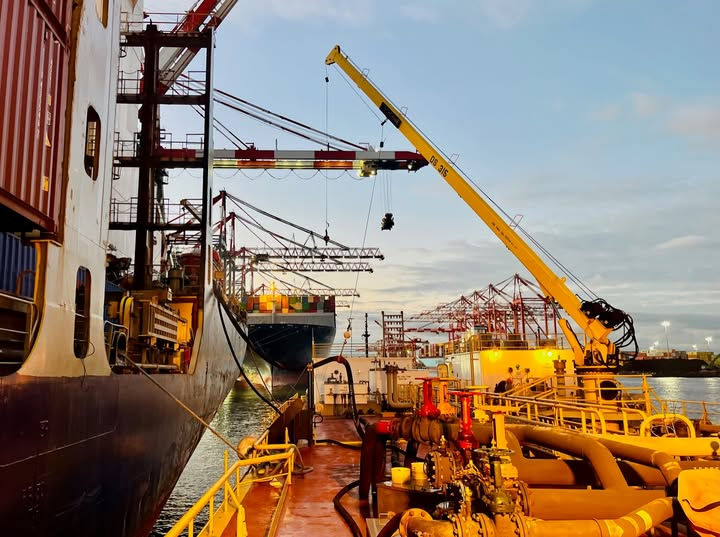
A Vane Brothers Double Skin barge during the bunkering process. (Photo courtesy of Vane Brothers)
The Importance of Bunkering to Port Efficiency
While bunkering may seem like a behind-the-scenes function, it is vital to the economic strength of the Port of Baltimore. Without it, vessels would be forced to travel to other ports for fuel, delaying shipments and reducing competitiveness. By supporting continuous vessel movement, bunkering sustains thousands of jobs and billions of dollars in trade. As global shipping transitions toward cleaner fuels, Baltimore’s bunkering operations are also adapting—investing in low-sulfur fuels and exploring the potential for alternative energy solutions such as LNG and biofuels.

SU Student McKenna Schmidl visited Vane Brothers for research purposes on February 21, 2025. Truly a Vane Brothers welcome! (Photo by Glenn T Johnston)
Bunkering services exemplify how logistics, safety, and environmental responsibility intersect in modern port operations. Through companies like Vane Brothers, the Port of Baltimore continues to demonstrate its importance not only as a transportation hub but also as a model of efficiency and sustainability within the maritime industry.


