Antimony : A Commodity

Author: K. Shirley
Editor: Tessa Hanna
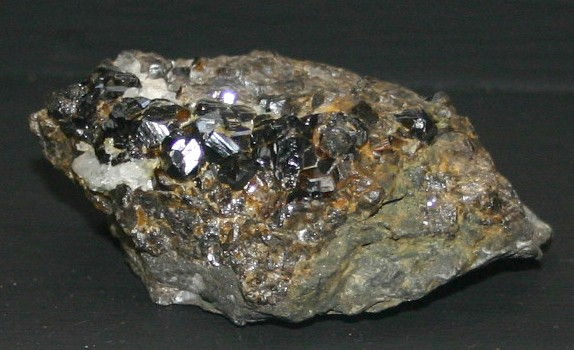
According to the Royal Society of Chemistry and the Agency for Toxic Substances and Disease Registry, antimony (Sb) is a hard, brittle, silvery-white semi-metal found in the Earth’s crust. It rarely occurs in pure form because it readily combines with other elements, especially sulfur, forming more than one hundred different types of minerals. Antimony is often extracted as part of complex sulfide ores, processed, and refined for industrial use. It is a critical mineral used in a range of manufacturing and technological applications, and Baltimore’s role as an import hub highlights its importance within both national supply chains and the global metals trade.

Import Quantities to the United States
According to ImportInfo in 2024, 193 shipments of antimony metal entered the United States, totaling approximately 5,638.96 tons. The average shipment size was about 29.22 tons. The five leading ports of entry by tonnage were Baltimore, Maryland (122,167 lbs); Norfolk, Virginia (121,331 lbs); Newark, New Jersey (109,649 lbs); Houston, Texas (99,867 lbs); and Los Angeles, California (94,080 lbs). These figures confirm that Baltimore serves as one of the primary U.S. gateways for antimony imports.
Import Quantities to the Port of Baltimore
Just in 2024, 82 shipments of antimony metal were received at the Port of Baltimore, totaling approximately 2,599.46 tons. The average shipment weight was about 31.7 tons. Major exporting ports included Haiphong, Tan Cang, and Vung Tau (Vietnam); Yantian, Xiamen, and Shanghai (China); Antwerp (Belgium); Mundra (India); Kaohsiung (Taiwan); Singapore; Manzanillo and Cristobal (Panama); Durban (South Africa); and Laem Chabang (Thailand). In total, nine different countries supplied Baltimore with antimony shipments in 2024. The primary consignee in Baltimore was Gondmet USA LLC, which received fifteen shipments.

Uses
According to the Royal Society of Chemistry, antimony is a toxic but valuable metal used in the production of semiconductor devices such as infrared detectors and diodes. When alloyed with lead, antimony strengthens materials for use in batteries, bullets, cable sheathing, and printing presses. Its compounds are also essential in flame-retardant materials, glass, enamels, and ceramics. These wide-ranging uses make antimony a strategically significant material in modern manufacturing and defense industries.
The U.S. Geological Survey (USGS) classifies antimony as a Critical Mineral. Critical minerals are raw materials considered essential to our nation's economic and national security because they are difficult to replace and are vulnerable to supply disruptions. Many are required to manufacture advanced electronics, military equipment, energy technologies, and transportation systems. Because the United States imports much of the antimony it consumes, maintaining reliable supply chains through ports such as Baltimore is important. By ensuring that American manufacturers and defense industries have continued access to this strategically important resource, it helps maintain the economy and our national defense. Furthermore, any problem regarding a strategic material supply chain immediately draws the attention of the US government and its attendant economic, diplomatic, and military resources.
Manufacturers and Suppliers
According to Market Research Future, global antimony production is dominated by Chinese and Australian firms. Hunan Nonferrous Metals Holding Group, of China, is one of the world's largest producers of antimony and, through its mining, smelting, and refining operations, has long been a dominant force in the global antimony industry. Tongling Nonferrous Metals Group is one of China's largest state-owned nonferrous metals companies, processing and marketing a wide range of industrial metals that support global manufacturing supply chains, including antimony-bearing products. Havilah Resources, an Australian mining company, is developing mineral deposits that include antimony, illustrating how Australia is emerging as an increasingly important non-Chinese source of this critical mineral. Recycled Antimony (France) specializes in recovering antimony from industrial waste and end-of-life products, demonstrating the growing importance of recycling as a supplemental source of this strategically significant metal. Global Antimony Recycling (United Kingdom) focuses on returning antimony to the manufacturing supply chain through recycling, reducing dependence on newly mined material while supporting a more circular economy.
Journey and Logistics
Antimony shipments arriving in Baltimore typically follow complex multimodal routes involving ocean vessels, transshipment hubs, and inland trucking. For example, one of the heaviest recorded shipments—116,559 lbs—originated in Haiphong, Vietnam. The cargo was loaded on the vessel ZIM SCORPIO, transferred at Yantian, China, and arrived in Baltimore in late December 2024, where it entered the US transportation network for delivery to its consignee the following day. This tracking data illustrates the efficiency and global interconnectivity of the Port of Baltimore’s logistics system.

Antimony is a small but strategically vital commodity within Baltimore’s trade portfolio. This shipment illustrates the efficiency and global reach of the Port of Baltimore's logistics network, connecting manufacturers on the other side of the world with American industries that depend on strategically important materials.